

There's one thing every parent expects to replace during the first year, "Tiny clothes".
One week a onesie fits perfectly. A few weeks later, the sleeves are too short and the snaps barely reach.
What catches many parents by surprise is that babies outgrow much more than their wardrobe.
As your baby grows, the way they feed, drink, chew, grip and explore the world changes too. Products that worked beautifully during the newborn stage may no longer suit their growing skills a few months later. Because your baby is developing new abilities, their everyday essentials need to keep pace.
Here are seven products parents often don't realise are designed to grow alongside their baby.
A newborn's feeding skills are very different from those of a six-month-old.
In the early weeks, babies are still learning how to coordinate sucking, swallowing, and breathing. A slower-flow teat helps support that rhythm.
As babies grow, their sucking strength often becomes more efficient, and some may become frustrated if milk flows too slowly.
Imagine drinking a thick smoothie through a tiny coffee straw. Eventually, you'd give up, because the effort outweighed the reward.
The same can happen during feeds.
Choosing the right teat flow helps your baby feed comfortably while matching their stage of development.
If you're unsure whether it's time to move up, our guide to “Selecting Your Bottle Teat Level” explains the signs to look for.
Parents often focus on how much milk goes into the bottle.
Babies focus on how comfortably they can feed from it.
As feeding patterns change, some families choose to move to larger bottle sizes simply because their baby's appetite has increased.
Others may continue using the same bottle system while adjusting teat flow instead.
The important point is that your baby's feeding needs won't stay exactly the same from birth to toddlerhood.
That's why many bottle systems, including Dr. Brown's Options+ range, are designed to adapt through different stages rather than requiring families to start over every few months.
Check our guide if you’re unsure when to change bottle types: “When to Switch Bottle Types To Support Baby’s Feeding Changes”
At first, babies explore with their eyes. Then they discover their hands. Before long, almost everything ends up in their mouth.
This isn't bad behaviour.
It's one of the ways babies learn about texture, temperature, and shape while soothing sore gums during teething.
A lightweight teether that works well for a four-month-old may become less interesting as grip strength improves and chewing patterns change.
Different shapes, textures, and sizes continue to provide new sensory experiences while supporting oral development.
Drinking from an open cup is a skill. Like crawling or walking, it develops over time.
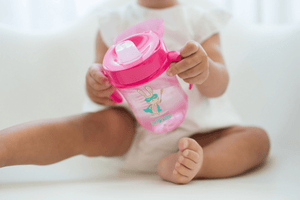
Training cups bridge the gap between bottles and regular cups by helping babies practise new drinking patterns while reducing spills.
Not every child moves through this stage at the same age. Some take to it quickly. Others need more time.
The goal isn't to rush transition; But to support growing independence when your child is ready.
If you're preparing for this next stage, our article on “Transitioning From Bottle to Solids: Ways to Wean” offers practical guidance for introducing new feeding routines.
The little things often change just as much as the big ones.
Bottle brushes.
Snack containers.
Travel storage.
Toddler cutlery.
Silicone bowls.
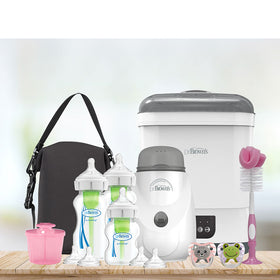
As babies become more independent, everyday feeding accessories evolve alongside them.
What starts as a carefully measured newborn feeding routine gradually becomes a child learning to hold a spoon, drink independently and explore different textures.
Each stage brings different needs and different tools to support them.
Every new skill your baby learns changes the way they interact with the world.
Rolling changes playtime.
Crawling changes exploration.
Teething changes comfort.
Learning to grip changes how they hold everyday objects.
The products you use every day are part of that journey.
Most times you’ll be replacing items because your baby has grown into something new, whether or not they’re worn out at the time.
That's a sign of progress.
From newborn bottles and age-appropriate teats to teethers, training cups and feeding accessories, Dr. Brown's designs products that grow with your child—not just through one milestone, but throughout their early years.
Explore the Full range of Dr. Brown's Australia collection to find feeding and baby care essentials designed to support every stage of your baby’s development.